



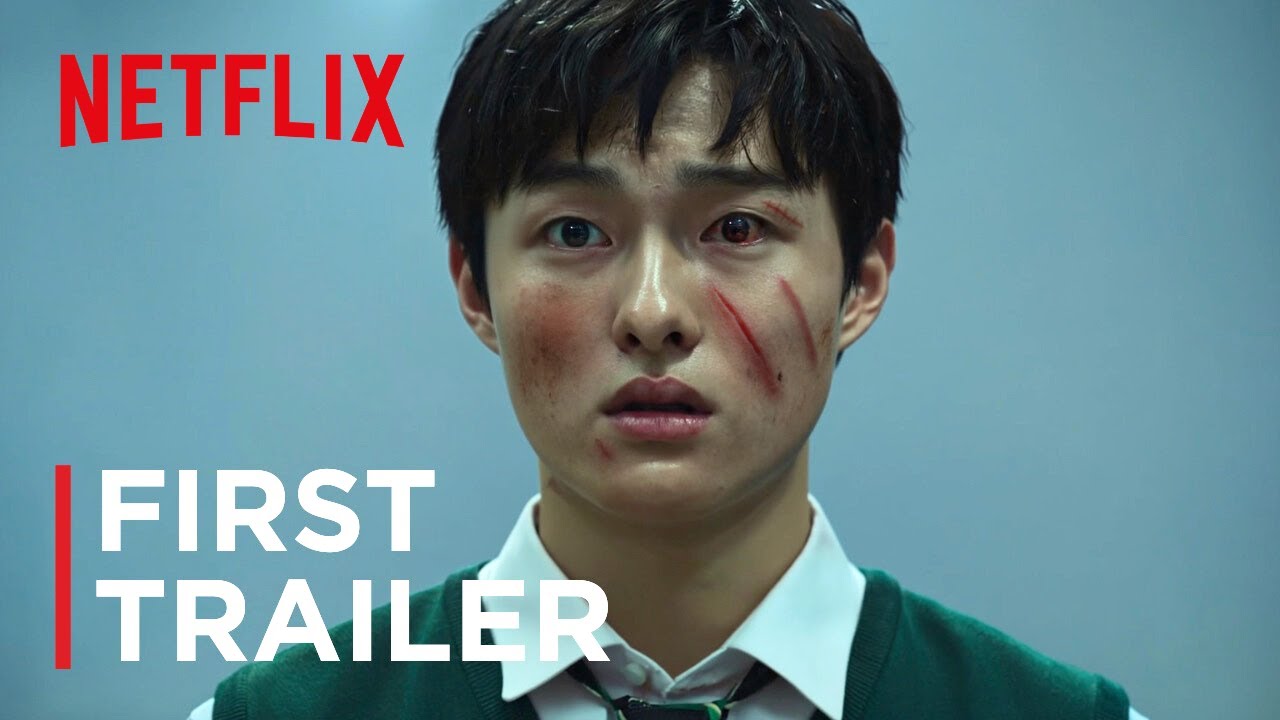
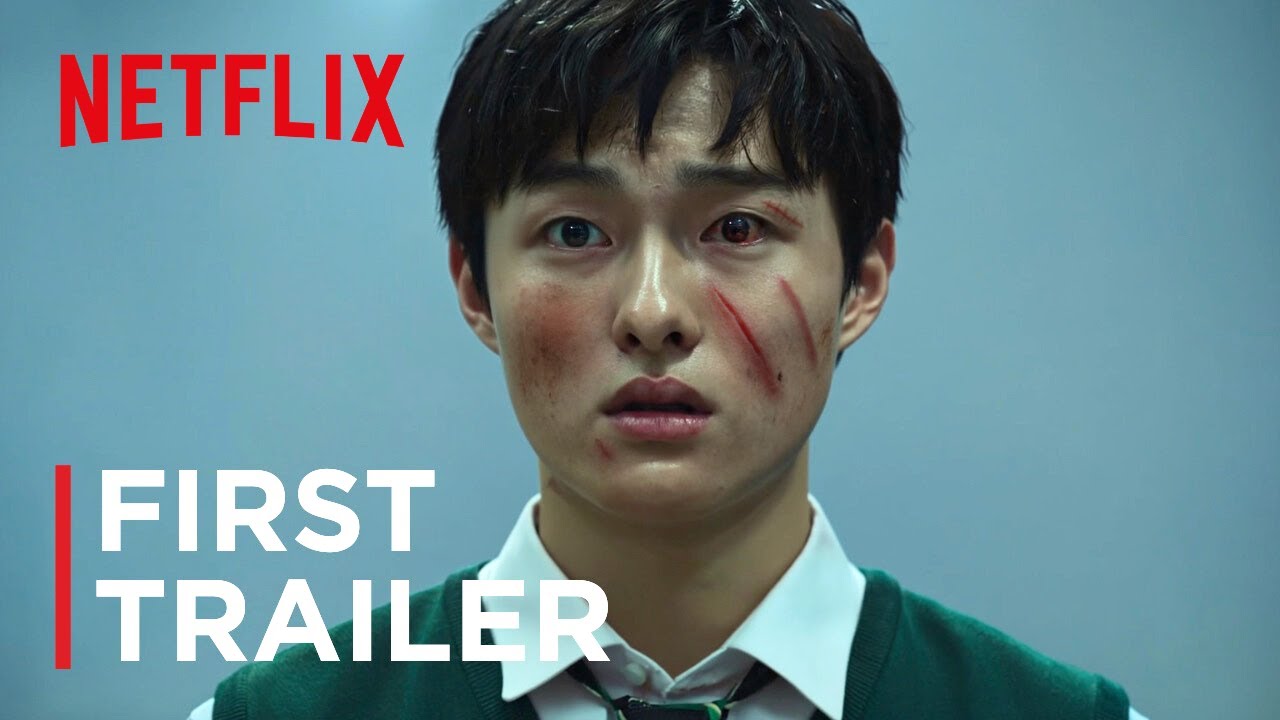
An Apocalypse That Refuses to Stand Still
There are zombie stories about survival, and then there are zombie stories about transformation. All of Us Are Dead: Season 2 firmly plants itself in the latter category. This long-awaited continuation of the Korean survival phenomenon does not simply escalate the carnage; it redefines the rules of its own nightmare. If Season 1 asked how far teenagers could be pushed before they broke, Season 2 asks a far more unsettling question: what happens when humanity itself is no longer the final stage?

Picking Up After Hyosan’s Ruins
The horrors of Hyosan High School still linger like an open wound. Season 2 wisely avoids undoing the emotional consequences of its predecessor. Loss is permanent here, grief is unresolved, and trauma has weight. The survivors are no longer wide-eyed students reacting to chaos; they are battle-scarred witnesses to a world that failed them.

What elevates this season’s premise is its central idea: the virus is no longer a mindless infection. It adapts. It evolves. It learns. Survival is no longer about hiding or running fast enough, but about understanding an enemy that may already be thinking several moves ahead.

The Rise of the Half-Bies
At the heart of Season 2 is Nam-ra, portrayed with chilling restraint by Cho Yi-hyun. Once a quiet outlier, she now occupies the most morally complex position in the series. As the reluctant leader of the half-bies, beings suspended between human conscience and monstrous instinct, Nam-ra becomes both protector and potential executioner.
This is where the season finds its thematic backbone. The half-bies are not merely a new threat; they are a mirror. They embody the fear that evolution may not come with compassion, and that survival might demand the surrender of empathy. Nam-ra’s struggle is not about control, but identity, a performance layered with sadness, fury, and quiet dread.
Evolution as Horror
- The virus adapts to fear and strategy
- Zombies hunt rather than wander
- Half-bies blur the line between victim and villain
By reframing the undead as thinkers rather than obstacles, the series injects new tension into a genre that often relies on repetition.
Returning Characters, Deeper Scars
Yoon Chan-young, Park Ji-hu, and Lomon return with performances sharpened by time and loss. Their chemistry remains intact, but it is no longer comforting. Trust is fragile, alliances feel temporary, and every moment of connection carries the threat of betrayal.
The writing allows these characters to change in uncomfortable ways. Courage curdles into obsession. Loyalty becomes liability. These are not heroes in the traditional sense, but survivors shaped by impossible choices. The show’s greatest strength lies in its refusal to offer easy moral victories.
A Cracking Military and a Failing System
Season 1 framed authority as distant and unreliable. Season 2 dismantles it entirely. The once-impenetrable military quarantine begins to fracture, exposing a system unequipped to handle an enemy that defies classification. Orders conflict, containment fails, and desperation leads to catastrophic decisions.
This institutional collapse grounds the horror in something painfully recognizable. The real terror is not the monsters outside the walls, but the realization that the structures meant to protect humanity may accelerate its downfall.
Direction, Atmosphere, and Escalation
Visually, Season 2 leans into darker palettes and more expansive settings. The claustrophobic hallways of Hyosan give way to broader, more volatile environments, yet the sense of entrapment remains. Massive hordes move with unnerving coordination, and action sequences emphasize dread over spectacle.
The pacing is confident, allowing moments of silence to stretch uncomfortably long before erupting into chaos. This restraint recalls the best survival cinema, where anticipation is often more devastating than violence itself.
What Season 2 Does Better
- More complex antagonists
- Stronger moral ambiguity
- Expanded world-building without losing intimacy
Emotion as the True Battleground
Despite its evolved horrors, All of Us Are Dead: Season 2 never loses sight of its emotional core. The most haunting moments are not the attacks, but the quiet realizations: that survival may require becoming something unrecognizable, that love can be a liability, and that the future may not belong to those who cling to the past.
There is a profound sadness running through the season, a sense that humanity is standing at a crossroads with no guarantee that compassion will make the journey forward.
Final Verdict
All of Us Are Dead: Season 2 is not content to repeat its own success. It evolves, just like its virus, into something darker, smarter, and more unsettling. By transforming a zombie series into a meditation on identity, evolution, and moral survival, it elevates itself above genre expectations.
If the first season shattered us within the walls of a high school, this second chapter threatens something far greater: the idea that humanity’s next stage may no longer include us as we are. It is grim, gripping, and deeply uncomfortable in all the right ways. We may not be ready for it, but like its characters, we cannot look away.